Written By: Erin Storm, PA-C
Published: March 19, 2021
Last updated: June 03, 2021
For everyday skincare essentials, pre- and post-treatment support, procedure enhancers, or even treatment alternatives, we’ve got you covered.

The Skinny
When it comes to cellulite, there are numerous misconceptions. Let’s clear some things up. Cellulite can affect individuals of any body weight and body fat level; it is more common in women; it tends to worsen with age; and, for some, diet and exercise is not sufficient to get rid of stubborn pockets of cellulite (check out our complete guide to Cellulite Concerns). The 'orange peel' or 'cottage cheese' descriptions of cellulite are, if we’re being honest, kind of bizarre, but they are also accurate. Cellulite is caused by a combination of structural and, sometimes, hormonal factors. Fortunately, the diversity and availability of treatments to combat cellulite are as ubiquitous as the condition itself.
The Specifics
Who needs a cellulite procedure?
The main cause of cellulite is an accumulation of body fat that causes the fibrous bands under the skin to pull down, giving the skin a dimpled, 'orange peel' look.
The Anatomy of Cellulite
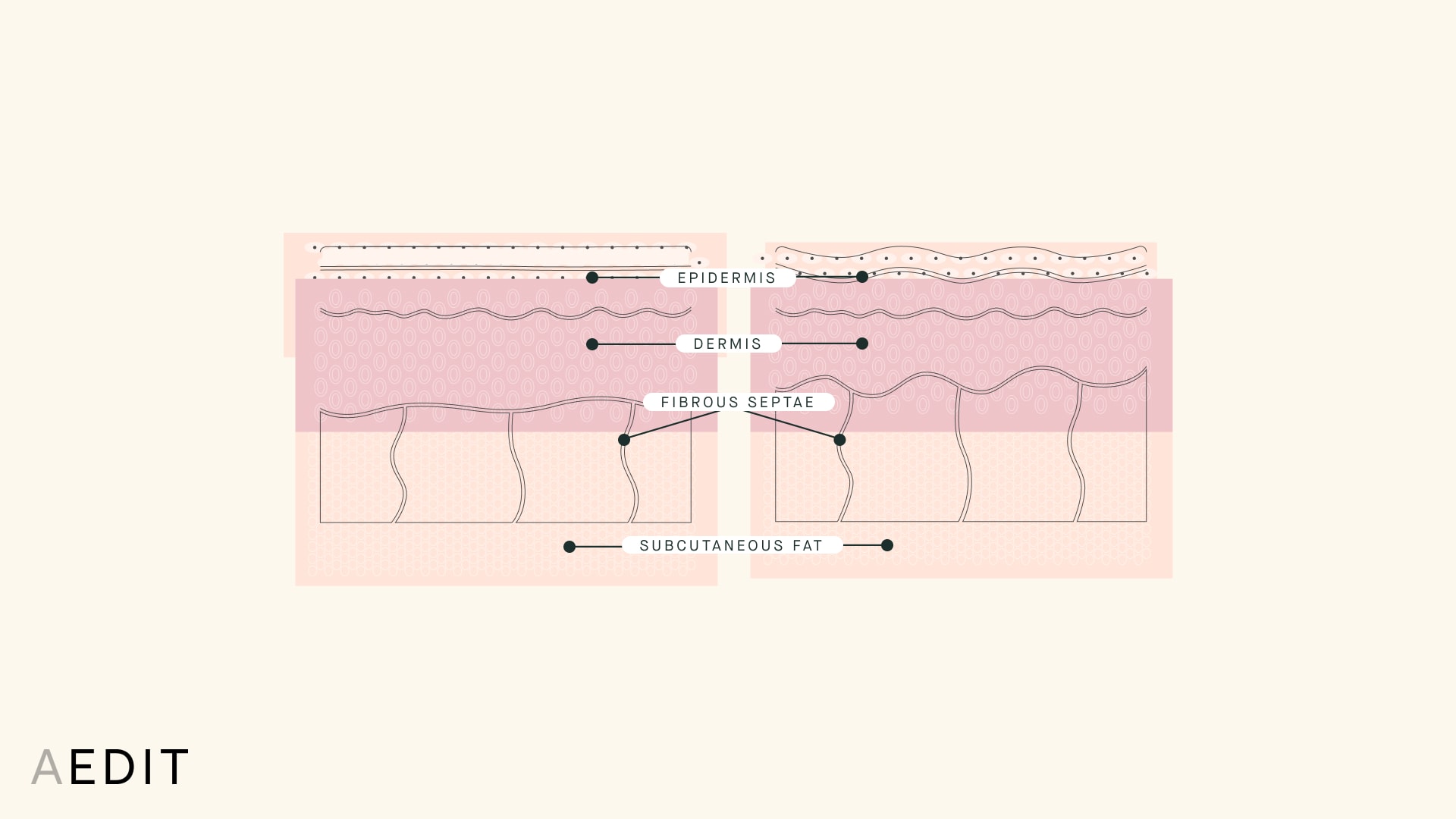
Research concludes cellulite appears more often in women than it does men. Women may begin developing cellulite deposits from adolescence well into their adult life. Although cellulite appears more frequently in women, men are not immune. Unhealthy lifestyle choices, such as poor diet and excess weight can contribute to cellulite buildup in men-mainly around the lower abdominal area.
An exercise program such as strength training or aerobic exercises can assist with skin tightening and reducing cellulite appearance. Diet and exercise lifestyle modifications, however, are entirely dependent on consistency.
There are three main classifications of cellulite:
- Flaccid Cellulite (Soft Cellulite): Sags the skin with a wavey, jelly-like appearance. It tends to be most noticeable in the arms, legs, belly, and other areas where there is an accumulation of fat. It can increase with age and/or weight gain.
- Compact Cellulite (Hard Cellulite): Caused by irregularities in the skin that create grooves in the thighs, glutes, and hips. This type of cellulite clings to muscle, does not move, and becomes hard and sensitive to touch.
- Edematous Cellulite: A difficult type of cellulite to treat due to a combination of poor circulation and fluid retention. Typically exists in the legs, especially the thighs and knees. This leads to loss of leg contours due to swelling. Commonly seen in women in their 20s and 30s.
Unfortunately, sometimes despite weight loss, a healthy diet, exercise, and good lifestyle choices, areas of stubborn cellulite can persist. This is where the professionals can help.
Of note, in some cases individuals experiencing hard or edematous cellulite should seek treatment in a timely manner due to the potential health risks associated with the circulatory issues represented by these types of cellulite.
What can you expect from a cellulite procedure?
Reducing and controlling cellulite buildup through diet and exercise takes time and willpower. And considering the rate at which individuals lose weight can differ, some may see results sooner than others.
Non-surgical procedures that utilize gels work to thicken the skin decreasing the appearance of dimples. Energy-based therapies, such as ultrasound wave therapy, work to break apart the fat layers deep under the skin. Both of these techniques typically require regular maintenance.
Surgical procedures completely remove the cellulite, but come with downtime, side effects, and ultimately may not completely improve the dimpling of the skin. In some cases treatments like liposuction may actually worsen the dimpling. It is also important to note that surgical procedures may remove cellulite, but the fat accumulations will continue to be subject to aging, diet, exercise, and hormonal changes.
Given the formation of cellulite is a lifelong process, most procedures can not entirely guarantee permanent results, and in most cases multiple and ongoing treatments will be necessary.
When should you seek a cellulite procedure?
When you should consider treatment is entirely dependent on your desired personal aesthetic. We all have cellulite, and let’s be honest, it bothers some of us more than others. If you keep active, are someone who is at a stable and maintainable weight, and are in overall good health, but are still frustrated by stubborn areas of cellulite you may benefit from a professional procedure.
As previously mentioned, individuals experiencing hard cellulite build-up should seek treatment in a timely manner due to the possibility of an underlying circulatory concern.
Why should you seek a cellulite procedure?
Seeking out professional assistance with correcting and managing cellulite is mostly a decision based on your desired personal aesthetic. A combination of lifestyle changes (think: diet and exercise and ditching cigarettes) in combination with professional procedures can provide significant and lasting benefits.
If you feel you would benefit from the physical and emotional benefits a cellulite removal procedure can provide, there are an array of different techniques available. Procedures in the form of massages, creams, surgeries, and even energy-assisted therapies can all correct and combat cellulite. To determine the best treatment for your unique concern, consult with a board certified plastic surgeon or dermatologist.
Professional Cellulite Removal
Procedures to alter the soft tissues, like fat and connective tissue, can help to lessen the appearance of cellulite and encourage the body to rejuvenate the area.
For Flaccid Cellulite
- Endermologie
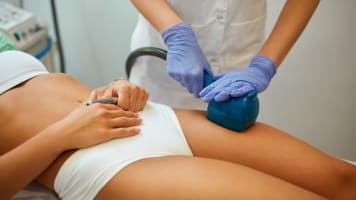
- Overview: A vigorous massage using a handheld roller that aims to lessen the appearance of cellulite. Increases the blood flow, reduces excess fluids, and smooths out fat pockets while reducing swelling and softening the skin tissue.
- Cost: from $150
- Recovery & Results: The results from an endermologie will be temporary and usually last around three months. It is recommended to receive at least one treatment every month for maintenance. Although this is a noninvasive technique, there is some risk of tissue injury and potential hematoma formation.
- Liposuction
- Overview:: Liposuction aims to reduce fat deposits, however, it should be noted that although liposuction removes fat cells it may not reduce dimpling and may actually worsen it.
- Cost: from $3,500
- Recovery & Results: The patient will see a decrease in the amount of fat in the region of the body, but the cellulite dimpling may not clear up. Expect bruising, swelling, and soreness for at least a few weeks. Most people can return to work within two days and normal activities within two weeks.
- Subcision: Cellfina
- Overview: Reduces dimpling by using a tiny blade to cut and release the connective tissue bands that pull the skin. The Cellfina allows the surgeon to cut the bands while reducing harm to the surrounding tissues.
- Cost: from $3,500
- Recovery & Results: Noticeable swelling for up to six weeks. Bruising may take up to three weeks to resolve. Patients may resume normal activities within one to two days. Results can last as long as three years.
- Laser Treatments: Cellulaze
- Overview: Uses a tiny laser fiber to sever connective tissue bands. It also works to melt away excess fat and increase collagen production.
- Cost: from $2,900
- Recovery & Results: The patient may return to their normal routine after two days and begin exercising again after two weeks.
- Carboxytherapy
- Overview: Fat cells will be injected with CO2 gas causing them to burst and be resorbed by the body.
- Cost: From $75
- Recovery & Results: This procedure has no lasting side effects and patients may resume everyday activities immediately outside of swimming and bathing in a tub for 24 hours after treatment.
- Radiofrequency for Cellulite Treatment
- Overview:: Reduces fat deposits and enhances collagen production by using radiofrequency energy devices such as BTL Vanquish, ThermiSmooth, and BodyFX.
- Cost: From $250
- Recovery & Results: Minimal to no side effects. The results are temporary and require maintenance.
- Cryolipolysis
- Overview: Aka CoolSculpting. This procedure involves freezing away fat over several treatments.
- Cost: from $1,500
- Recovery & Results: Significantly less downtime than liposuction. Requires three to four months of treatments.
- Qwo™
- Overview: A new prescription medication to reduce cellulite through injections given every three weeks over three visits.
- Cost: dependent on insurance
- Recovery & Results: There is no associated recovery time. Results are permanent, but subject to changes in weight and natural aging.
- BodyTite™
- Overview: RFAL energy to emulsify fat and improve skin laxity.
- Cost: $5,500 - $14,500
- Recovery & Results: Swelling, bruising, and tenderness resolve within a few weeks. The results will last a few years.
For Compact Cellulite
- Mesotherapy Injectables
- Overview: An injection of hormones, aminophylline, and other ingredients that destroy connective tissues and reduce cellulite appearance.
- Cost: from $250
- Recovery & Results: No exercising for 48 hours with increased fluid intake before and after procedure. The results are temporary.
For Edematous Cellulite
- Lymphatic Drainage Sessions
- Overview: A therapeutic massage which uses light pressure and gentle strokes along the body to increase the flow of lymph, reduce toxins in the body, and improve blood flow.
- Cost: from $475
- Recovery & Results: There is no downtime after the treatment and the patient can go about their daily routine immediately. With repeated treatments circulation will start to improve and cellulite will loosen.
In the Los Angeles area?
Book yourself a Cellulite Removal Solutions treatment at AEDIT Cosmetic Wellness.
At-Home Cellulite Removal
Cellulite may respond to methods that improve and stimulate blood circulation (think: stretching regularly, keeping active, not sitting or standing for too long, taking hot baths, and using warm water jets to massage the area). Additionally, compression socks or leggings can be worn throughout the day or at home to assist with blood flow.
Discover science-backed solutions from AEDIT Medshop
We’ve taken out the guesswork so you can shop with confidence, knowing you’re choosing what’s right for you.

Not sure what’s the right treatment for you?
Schedule an appointment to get your customized treatment plan.
To learn more about our content creation practices, visit our Editorial Process page.
Source List
- GB Forbes Body Fat Content Influences the Body Composition Response to Nutrition and Exercise PubMed.gov; 2000-05-01
- Paul Cohen, Bruce M Spiegelman Cell Biology of Fat Storage PubMed.gov; 2016-08-15
- American Society of Plastic Surgeons 2018 Plastic Surgery Statistics Report plasticsurgery.org; 2019-01-01