Written By: Erin Storm, PA-C
For everyday skincare essentials, pre- and post-treatment support, procedure enhancers, or even treatment alternatives, we’ve got you covered.

The Skinny
When it comes to treating acne, there is no such thing as one size fits all. Depending on the type, size, and severity of a breakout, patients may require any combination of professional and at-home remedies to clear the skin (check out our complete guide to Acne Concerns). From in-office and topic treatments to diet and lifestyle modifications, acne solutions are as diverse as the individuals experiencing the breakouts.
The Specifics
Who needs treatment for acne?
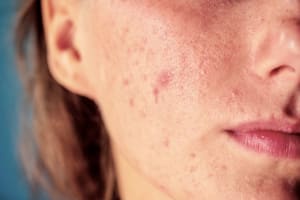
Acne vulgaris (a.k.a. acne) is the most common skin condition in the United States, and it is not just a teenage concern. Adults into their forties may also experience a case of adult acne ranging from a few bumps to widespread clusters of blemished skin on both the face and body.
There are two main categories of acne, inflammatory and non-inflammatory, which can present with varying degrees of severity. The lesions occur after a pore becomes clogged with oil, dead skin cells, and/or p. acnes bacteria.
- Inflammatory Acne: Refers to lesions like cysts and pimples that appear red and swollen as a result of bacteria that has infiltrated the pore.
- Non-Inflammatory Acne: Refers to mild lesions like comedones (a.k.a. whiteheads and blackheads) that are relatively superficial and do not swell.
Types of Acne

Within those general classifications exists more specific types of acne lesions. Individuals may experience any number of these specific types. On the non-inflammatory side, open comedones (i.e. blackheads) form when a clogged pore remains open, resulting in a dark spot on the surface of the skin. Conversely, closed comedones (whiteheads) appear when a pore closes on top of a buildup of sebum and dead skin cells resulting in a small bump. Patients with non-inflammatory acne experience little to no pain or redness, although if untreated comedones can become inflamed leading to inflammatory acne lesions.
Inflammatory acne tends to be more severe and comes in the form of papules, pustules, nodules, and cystic acne. Papules and pustules are red and may or may not be pus filled. They are commonly known as pimples. When acne lesions become rooted deeply below the surface of the skin they are classified as cysts and nodules. These painful and swollen lesions are notorious for chasing scarring.
Individuals who have had acne breakouts for several months or years should consult a board-certified dermatologist regarding treatments that will target their specific type of acne. According to the American Academy of Dermatology (AAD), people who suffer from acne may not think that it is important to get diagnosed for their condition, but untreated or improperly treated acne can lead to the development of acne scars, which have long-term effects on skin clarity, tone, and texture.
What can you expect from acne treatment?
Just as no two breakouts are the same, there is no universal treatment program for acne. While some patients may be able to clear their skin with over-the-counter products containing antibacterial ingredients like benzoyl peroxide or salicylic acid, more severe acne cases may require prescription medications like isotretinoin (Accutane) or spironolactone.
An important note when treating everything from the casual whitehead to the cystic breakout is the benefit of diligent and persistent treatment. While pimples are relatively harmless, they can take days or even weeks to clear. Developing a treatment protocol with the help of a board-certified dermatologist or skincare expert can help to ensure proper acne clearance to minimize scarring and other adverse effects.
When should you seek treatment for acne?
While many over the counter skincare products can alleviate most mild to moderate forms of acne, cysts and nodules are often difficult to treat without the help of a professional. In some cases, severe skin irritation and/or damage may occur if proper treatment is not obtained in a timely manner.
Individuals dealing with chronic or severe flare-ups can manage their condition with the help of topical antibiotics like isotretinoin (Accutane) or spironolactone. These must be taken under the care of a provider. Additionally, those who have stopped having success with at-home remedies may decide it is time to seek the help of a dermatologist for topical or oral-based prescriptions.
Why should you seek treatment for acne?
There is no hard and fast rule as to when or why someone should seek treatment for acne, but when breakouts become chronic and painful, or simply begin to interfere with a patient’s day-to-day life, it may be time to consider both at-home and professional solutions that can clear skin, thwart scarring, and help prevent future breakouts.
Once you’ve decided acne treatment is for you, there are several options to consider depending on the severity and scope. While oral medications exist to treat more severe cases of acne (think: cysts and nodules), non-inflammatory (i.e. blackheads and whiteheads), and mild to moderate pimples can often be cleared with over the counter skincare products.
Cosmetic Procedures for Acne
Professional acne treatments will most likely be prescribed by a dermatologist or performed by a licensed aesthetician to help clear mild to severe cases of acne. Regardless of skin type, there are acne treatments suited to every unique case of acne.
For Comedones (Blackheads & Whiteheads)
For the less severe forms of acne, topical treatments can be safe, effective, and relatively inexpensive.
- Facials for Acne
- Overview: Chemical peels are used for their deep exfoliation abilities. Additionally, extractions can be performed to remove comedones before they turn into pustules.
- Cost: from $100
- Recovery & Results: Mild irritation resolves quickly. The results are temporary and require regular maintenance.
- Topical Retinoids
- Overview: Solutions applied directly to the skin to promote cell turnover and remove dead skin cells.
- Cost: dependent on insurance
- Recovery & Results: Mild irritation at the application site. Regular and consistent use required to maintain results.
- LED Light Therapy
- Overview: LED Lights at different colors, depths, and wavelengths penetrate skin layers to clear blemishes and lesions.
- Cost: $25 -$250
- Recovery & Results: Little to no side effects. Results maintained with consistent use.
For Cysts, Nodules, Papules, and Pustules
For more severe acne penetrating deeper into the dermis, more potent treatments will be necessary.
- Benzoyl Peroxide for Acne
- Overview: Perhaps one of the most well-known acne treatments, this topical antiseptic can be applied directly to the skin in the form of cleansers, gels, lotions, and more. While many over-the-counter products contain the ingredient, more potent prescription topicals are also available.
- Cost: from $10
- Recovery & Results: Dryness at the application site. It should also be noted that the ingredient can bleach clothing, towels, and sheets, although it does not lighten the skin. As with most topical acne treatments, lesions can take four to six weeks to fully heal.
- Isotretinoin (Accutane) for Acne
- Overview: (aka Accutane) An oral retinoid treatment that works to control the skin’s oil production by shrinking the sebaceous gland. Women who wish to take isotretinoin are required to submit two negative pregnancy tests prior to starting the drug, and must agree to use two forms of birth control while on it.
- Cost: dependent on insurance
- Recovery & Results: Considerable dryness and skin peeling. Rarely fatigue and thinning hair. Acne typically gets worse before it gets better during treatment, but it can yield permanent results.
- Spironolactone for Acne
- Overview: An oral medication that helps to regulate the hormone fluctuations triggering acne breakouts by blocking the androgen (i.e. testosterone) receptors in the body. Only used in women.
- Cost: $10 - $200
- Recovery & Results: It takes a minimum of four to eight weeks to start seeing results, and women who take spironolactone may experience irregular menstrual cycles, and breast tenderness in the process. Some patients enjoy permanent clearing from the drug, while others may see a lessening of symptoms.
In the Los Angeles area?
Book yourself a Acne Solutions treatment at AEDIT Cosmetic Wellness.
At-Home Acne Treatments
Whether you are looking for short or long term acne relief, there are an array of at-home treatment options available for acne. In addition to incorporating skincare products formulated with acne-fighting ingredients, diet and lifestyle changes may also help to minimize acne triggers. It should be noted that patients are encouraged to consult a dermatologist or skin expert prior to starting any at-home treatments to ensure it will be safe and effective, and not interact with any treatments they are already on.
Over-the-Counter Skincare for Acne
Since the root cause of acne is clogged pores, using skincare products with antibacterial and anti-inflammatory ingredients can help to heal and prevent breakouts by cleansing and balancing the skin.
- Alpha Hydroxy Acids (AHAs): Exfoliating water-soluble acids that rid the skin of the dead cells that can cause acne.
- Retinoids: Best for treating comedonal acne (whiteheads and blackheads), the multi-purpose vitamin A derivative improves cell turnover, thereby helping to slough-off the dead skin cells and excess oil that leads to breakouts.
- Salicylic Acid: An oil-soluble beta hydroxy acid that deeply exfoliates the pores to remove dead skin cells and excess sebum.
- Sulfur: Applied topically, sulfur has antimicrobial properties that help to dry out acne lesions by absorbing excess oil from the skin. Commonly found in spot treatments and drying lotions, the ingredient is considered more gentle than benzoyl peroxide and salicylic acid.
- Tea Tree Oil: An all natural and highly effective solution for spot treatments at high concentrations. Tea Tree can also be diluted for use across larger areas.
Diet and Lifestyle Modifications for Acne
Contrary to popular belief, eating greasy food and not keeping your face clean does not cause acne, but it definitely doesn’t help.
Research has shown that high-glycemic foods (i.e. white bread, candy, potato chips, etc.) lead to blood sugar spikes that cause inflammation throughout the body. Inflammation coupled with increased sebum production can lead to clogged pores and acne. Dairy is also often discussed as a possible acne trigger, and the hormones found in dairy products have been loosely correlated to causing inflammation.
While there is no definitive understanding as to why some people are prone to acne and others are not, there are certain behavioral changes that will help any individual develop clearer skin. Establishing good sleep patterns, staying hydrated, exercising (just don’t forget to wash your face after!), and using proper sun protection can all help to reduce the inflammation that leads to acne.
Discover science-backed solutions from AEDIT Medshop
We’ve taken out the guesswork so you can shop with confidence, knowing you’re choosing what’s right for you.

Not sure what’s the right treatment for you?
Schedule an appointment to get your customized treatment plan.
To learn more about our content creation practices, visit our Editorial Process page.